

Welcome to the second installment into the Air element discussion. We ended last week’s conversation with a glimpse of Ayurvedic principle of interconnectivity (quantum physics calls this “law of entanglement”), and our own personal inside look into the nature of this principle.
Did you get a chance to note your body’s reaction to windy weather?
What did you find out?
Some of us (especially those with chronic arthritic or persistent pain conditions, as well as individuals who tend toward anxiety or insomnia) are particularly prone to feel the influence of wind on our body-mind systems. There’s a list of lifestyle suggestions in the footnotes of this post to help make windy weather a bit more bearable. These alterations are just a bit ahead of the curve in our element discussion; they will begin to make more sense in a few weeks as you gain knowledge of different elements and also body-mind types, or doshas.
As for now, back to the Air – our element in question. The essence of this element is much easier to grasp than, say, “Space,” if only because Air fits neatly into our pre-conditioned worldview. Since grade school we’ve been taught that air is a particular combination of several particular gases; that air is necessary for human beings to survive, and that Earth is surrounded by atmosphere made of air. The Ayurvedic view of Air principle is somewhat similar: according to Ayurveda, Air element exists as wind in the outer environment, and, of course, as the breath inside our bodies.
You already know that clean Air is important; the Ayurvedic view reinforces the idea that fresh, unpolluted Air is not a luxury, but a necessary ingredient for healthy, resilient living.
What kind of Air are you breathing? Is it the stale indoor air of a winterized house or office? Is it a fume-laden, exhaust-filled air of a busy commute?
The way we breathe is just as important as the quality of our Air. In the next blog post we’ll look at our breathing habits – good, bad and, as you probably guessed, ugly. We’ll examine the way in which persistent pain alters our breath, and how these furtive changes perpetuate pain and contribute to mental disarray.
As it goes, we’ll start with a DIY to gain insight in the ways of our breath.
DIY Breath Inquiry (about 10 minutes):
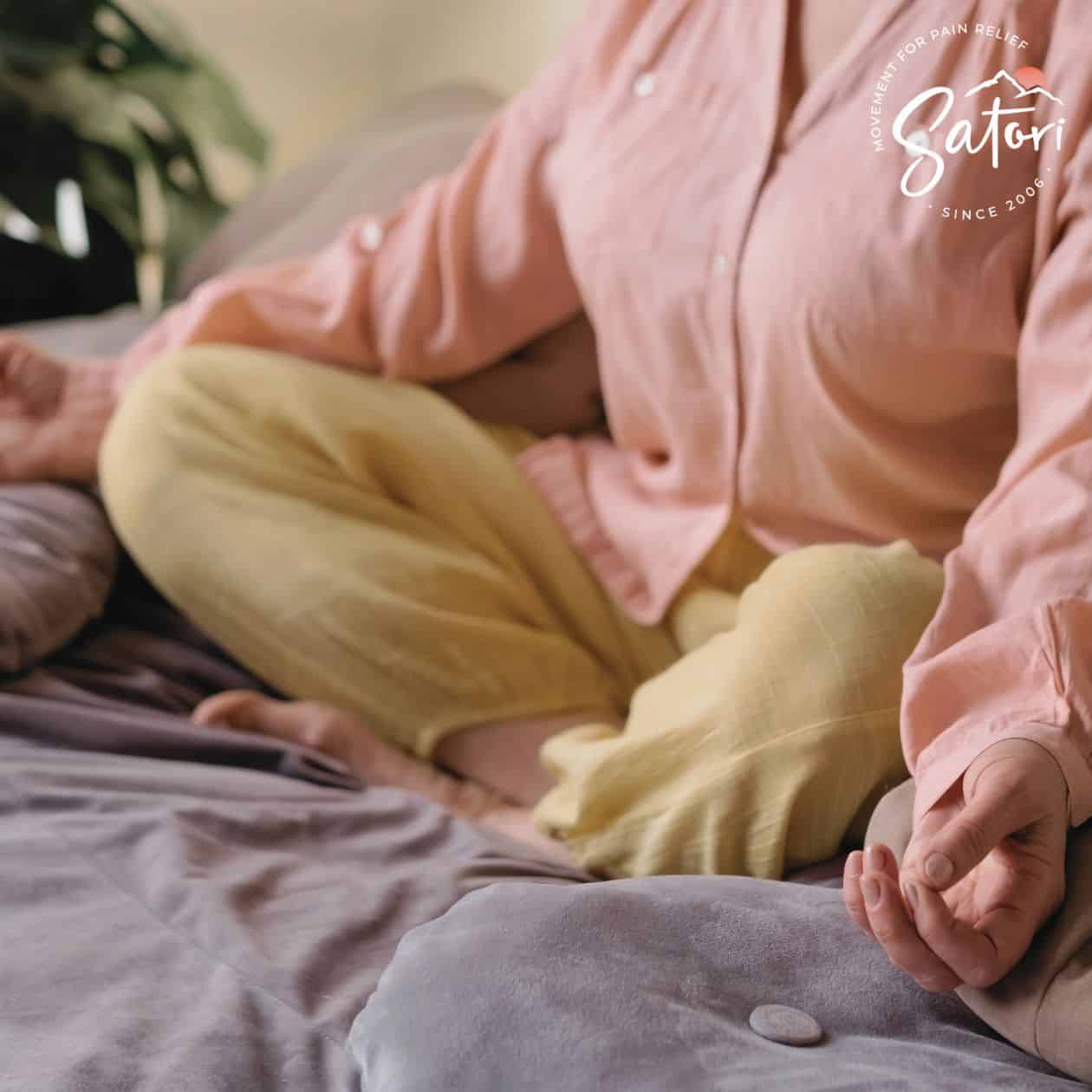
Start in a comfortable resting position, with your spine elongated and belly muscles relaxed. Comfortable positions are highly individual: you can be lying on your back with your knees bent; or, maybe, on your side, with pillows propping your top arm and leg. You could be sitting in your favorite chair, or even cross-legged on the floor. Please spend a few minutes discovering what works well for your body. As I mentioned earlier, the only real prerequisite for this inquiry is that your breath can move unimpeded; a relaxed spine and soft belly muscles are a must.
Once set up, close your eyes and focus on your breath; imagine that this is the very first time you are discovering your breath.
Are you breathing through your mouth or your nose?
Where is the epicenter of your breath – a place you feel your breath starts?
Where do you feel the most prominent movement – in your chest, ribs, or abdomen?
Is your inhale and the exhale of equal length? Which one takes more effort?
Once you are finished with the exploration, spend a few moments focusing on the movements of your breath. Enjoy!
And now, as promised, making sense of windy weather: here are 5 lifestyle tips to help your body cope better. I didn’t include detailed explanations as to why these work; please take it on faith just this once.
1. Keep warm; make sure your head (ears and all), neck, and pelvic area are well insulated.
2. Switch to warm, moist, nourishing foods. Eat most of your veggies cooked. Yup, ditch those bright green salads, unless you are willing to cook the greens.
3. Avoid icy drinks. Drink room temperature or warm water; you can also experiment with some warming teas, like ginger-lemon for example.
4. Place a warm mist humidifier in your bedroom.
5. Spend a few minutes each day practicing mindfulness or meditation. This doesn’t need to be a lengthy formal practice; even a few minutes of observing your breath (just like we did in the experiment above) will make a difference.
I would love to hear how these simple changes work for you: which ones were you able to integrate, and which ones fell by the wayside? As I mentioned earlier, Ayurvedic approach is highly individualized; in a private consultation setting we look at multiple factors to create a lifestyle plan that is uniquely suited to one’s present circumstances. The broad suggestions I’ve included in this post are a great place to start; book a private appointment to design a plan best suited to your individual needs.
