

I don’t know about you, but I feel that recovering from an illness or injury is tedious and oh-so-hard. It seems to drag on, and on, and on.
It doesn’t help that choosing the right rehab option is rather tricky….
Many of us, bogged down by all the options, give up and stop before we start.
Some, discouraged by the lack of immediate improvement, switch from one type of rehab to another, cycling through therapists but not achieving much as far as progress goes.
Others stick with a familiar modality or a familiar therapist for way longer than necessary, often even after the progress has stalled. Familiar is – well, familiar. Unknown can feel intimidating….
Here is the condensed version of a rehab model that I’ve developed for myself.
Looking back I feel like I’ve been researching it for the last 20 years, at least…
With just some minor tweaks this approach is just as applicable to mental as it is for physical health. I’ll keep it short and sweet!
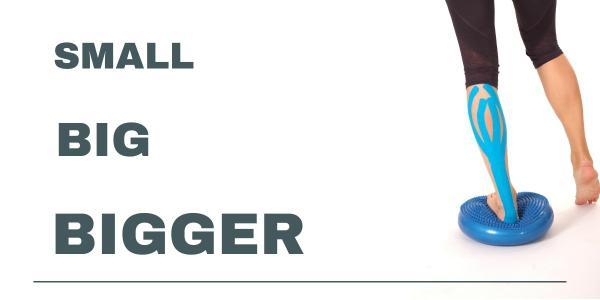
The short for this model is SMALL – BIG – BIGGER:
SMALL: focus on the area of hurt / injury.
Ask yourself: What can I do to feel better right here / right now? What kind of tools do I have to help myself? Who can I ask for help?
BIG: focus on the whole physical body.
Ask yourself: Are there any muscular imbalances? Do I always get injured in the same general area? Could there be a pattern of movement that is consistently causing overuse – misuse – abuse injuries? Am I breathing well?
Do I feel weak or stuck in certain areas – is there something that might need to be lengthened? strengthened?
This area is where I tend to hire helping professionals: familiar patterns are so ingrained into our every gesture and movement, one needs an outside set of well-trained eyes to spot + correct movement imbalances.
Same idea, of course, applies to working with a psychologist.
BIGGER: focus on entire body – mind ecosystem.
Ask yourself: How’s my ability to recover? Am I sleeping well + enough? Is my current diet conducive to my body type so I build high-quality cells for repair? Am I managing my stress levels effectively and scheduling my activities with rest + recovery in mind?
You might be surprised to learn that unmanaged stress can seriously impact our ability to learn new patterns – be it in physical movement or mental and emotional well-being.
A final thought.
Many of us tend to focus – often exclusively – on passive rehab. In passive rehab, just as the name suggests it, we are the passive recipients of care.
I’m not gonna lie, I love a good massage, and physiotherapy has helped me a great deal over the years.
But no massage will make weak muscles strong.
Physio or chiro adjustments usually hold only for a little while. Eventually the body quietly slides into its usual form – as both connective tissue and the nervous system return to a familiar state of affairs.
In a well-thought out rehab program both passive and active rehabilitation techniques are used; the emphasis always is on the active recovery.
Active recovery doesn’t just wake up the dormant muscles.
Ultimately, it is about feeling in control of our recovery. That’s what matters.
Building trust in our ability to help ourselves is empowering. This is how we develop resiliency and lay the foundation for success.
Hey, my name is Julia
Living with chronic pain has taught me to look for solutions in unlikely places – places where most people see only problems.
Over the years I’ve gotten to be pretty good at this problem-solving and silver-lining finding thing.
So good that I felt compelled to share what I’ve learned and help others to find their sea legs while navigating, living, and winning their battle with chronic pain.
